Businesses entering or expanding in the UAE often need more than a direct translation of their content. Language, cultural expectations, local terminology, customer behaviour, and business communication can all influence how a message is understood.
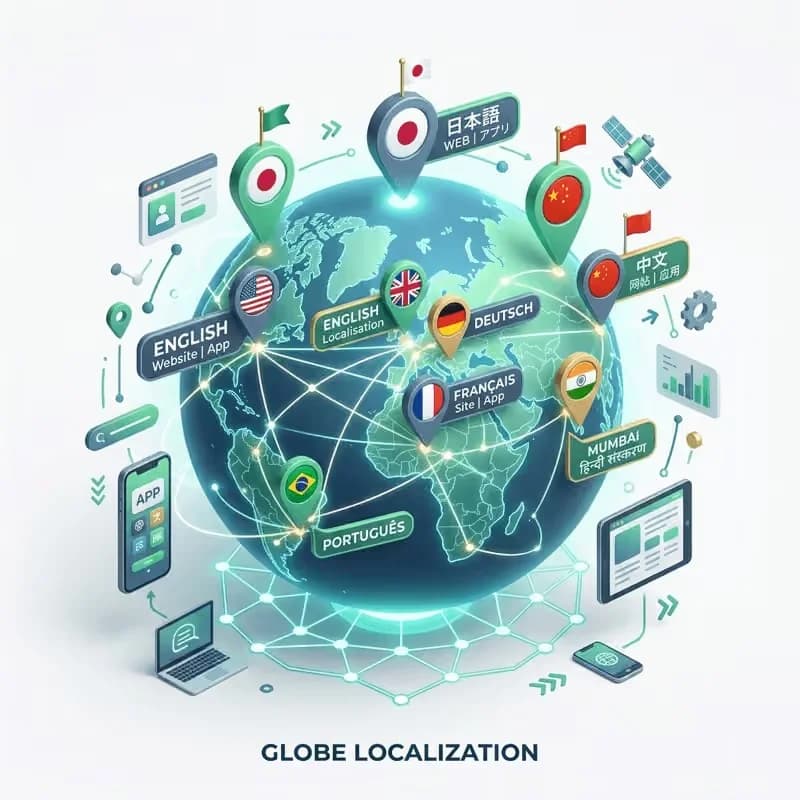
This is where Localization Services UAE can help. Localization adapts content, communication, and digital experiences to suit the language, culture, and expectations of a specific market while preserving the original purpose of the content.
For businesses operating in a multilingual environment such as the UAE, localization can be relevant to websites, applications, marketing materials, product information, corporate communication, and other customer-facing content.
Understanding how localization works can help businesses determine when they need localization rather than standard translation.
What Are Localization Services in the UAE?
Localization services involve adapting content or a product for a specific language, market, and cultural environment.
While translation focuses primarily on converting written or spoken content from one language into another, localization considers the broader context in which the content will be used.
Localization may involve adapting:
Language and terminology
Cultural references
Date and time formats
Currency
Units of measurement
Images and graphics
User interface elements
Marketing messages
Product descriptions
Website content
Mobile applications
Customer communication
For businesses targeting customers in the UAE, localization can help make content more relevant to the intended audience while maintaining the original business message.
What Is the Difference Between Translation and Localization?
Translation and localization are closely related but are not exactly the same.
Translation | Localization |
Converts content from one language to another | Adapts content for a specific market and audience |
Focuses primarily on linguistic accuracy | Considers language, culture, context, and user expectations |
Usually preserves the original format and message | May adapt examples, visuals, formats, and terminology |
Suitable for many standard documents | Useful for market-specific content and customer experiences |
Primarily language-focused | Language and market-focused |
For example, translating a website from English into Arabic may change the language but leave the original examples, graphics, currency, and formatting unchanged.
Localization goes further by reviewing whether those elements are appropriate for the intended UAE audience.
Why Do Businesses Need Localization Services UAE?
The UAE has a diverse population and a business environment where companies regularly communicate with customers, partners, employees, and organisations from different linguistic and cultural backgrounds.
Localization can help businesses create content that feels appropriate for the market they are targeting.
Potential benefits include:
More relevant customer communication
Better understanding of product information
Consistent brand messaging
Improved user experience
More culturally appropriate marketing
Clearer business communication
Greater consistency across multilingual content
Localization is particularly useful when a business is adapting a website, application, marketing campaign, or product for a new market.
What Types of Content Can Be Localized in the UAE?
Localization can apply to many forms of business and digital content.
Website Localization
Website localization adapts website content and user experience for a specific market.
It can include:
Website copy
Navigation
Buttons
Forms
Product descriptions
Images
Currency
Contact information
Date and number formats
SEO elements
For a multilingual UAE website, Arabic and English content may need to be managed consistently so users can navigate and understand the site easily.
Mobile App Localization
Mobile applications may require localization of both language and user interface elements.
This can include:
App menus
Notifications
Buttons
Error messages
Instructions
Payment information
Date and number formats
Localization should also account for how translated text affects the available screen space.
Marketing Localization
Marketing content often requires more adaptation than direct translation because slogans, cultural references, humour, and promotional messages may not have the same effect in another market.
Marketing localization can cover:
Advertisements
Social media content
Campaigns
Brochures
Email marketing
Promotional materials
Landing pages
The goal is to preserve the intended message while making it suitable for the target audience.
E-Commerce Localization
E-commerce businesses may need to adapt:
Product descriptions
Prices
Currency
Shipping information
Checkout content
Payment instructions
Customer support messages
Return policies
Clear and locally appropriate information can make the purchasing process easier for customers.
Software and Digital Product Localization
Software localization can involve both linguistic and technical adaptation.
It may include:
User interfaces
System messages
Help content
Documentation
Menus
Error messages
User guides
Technical testing is often important to ensure that localized text displays correctly.
What Does the Localization Process Involve?
A professional localization project usually begins with understanding the business, target audience, content, and intended market.
1. Define the Target Audience
First, identify who will use or read the content.
This may include:
UAE consumers
International customers
Local businesses
Government-related organisations
Corporate employees
Professional audiences
Understanding the audience helps determine the appropriate language and communication style.
2. Review the Existing Content
The original content is reviewed to identify terminology, cultural references, images, formatting, and other elements that may need adaptation.
This stage can also identify content that should not be translated literally.
3. Translate and Adapt the Content
The content is translated and adapted for the target market.
The process may involve changes to:
Terminology
Examples
Currency
Measurements
Date formats
Marketing expressions
Cultural references
The objective is to preserve the original intent while making the content suitable for the target audience.
4. Review the Localized Content
The localized content should be reviewed for language accuracy, consistency, context, and presentation.
For digital products, this may also involve checking the user interface.
5. Test the Final Content
For websites, applications, and software, testing helps identify issues such as:
Text overflow
Incorrect formatting
Broken layouts
Untranslated elements
Incorrect links
Display problems
Technical and linguistic quality checks can be particularly important for larger localization projects.
Is Arabic Localization Important for Businesses in the UAE?
Arabic localization can be relevant for businesses targeting Arabic-speaking audiences in the UAE.
However, the appropriate language strategy depends on the business, target audience, industry, and type of content.
For some businesses, bilingual English-Arabic content may be appropriate. Others may need additional languages based on their customer base.
The important point is to understand the audience before deciding which content should be translated or localized.
Localization for Legal and Business Documents
Not every legal or official document requires localization. Many documents require accurate legal translation instead.
Localization is generally more relevant to content intended for a specific market or user experience, while legal translation focuses on accurately communicating the legal meaning of a document.
For example:
A contract may require legal translation.
A website may require localization.
A product brochure may require marketing localization.
A government-facing document may require an appropriate certified translation.
Choosing the correct service depends on the intended purpose of the content.
If your business requires legal or official document translation, Fimkin provides Translation Services UAE.
How Much Do Localization Services UAE Cost?
The cost of localization varies depending on the scope and complexity of the project.
Factors that can affect pricing include:
Number of words
Number of pages
Language combination
Type of content
Technical complexity
Website or app size
Number of markets
Design requirements
Review and testing requirements
Project deadline
A website localization project, for example, may involve considerably more work than translating a short marketing document.
For an accurate quotation, provide the content type, languages, volume, target audience, and expected delivery date.
How to Choose a Localization Company in UAE?
Choosing the right provider depends on the type and scale of the localization project.
Consider:
Language Expertise
The provider should have appropriate linguistic expertise for the target language.
Industry Knowledge
Technical, legal, medical, financial, and marketing content may require different terminology and subject knowledge.
Cultural Understanding
Localization requires an understanding of cultural context, not simply language conversion.
Quality Control
Ask how the provider reviews localized content and maintains terminology consistency.
Technical Capability
For websites, applications, and software, the provider may need to work with specific file formats, content management systems, or localization tools.
Confidentiality
Businesses may provide proprietary information, customer data, product information, or internal materials. Confidential handling should therefore be considered when choosing a provider.
When Should a Business Use Localization Instead of Translation?
A business should consider localization when content needs to be adapted for a specific market rather than simply converted into another language.
Localization may be appropriate for:
Websites
Mobile applications
Software
E-commerce stores
Marketing campaigns
Product information
Digital platforms
Customer communication
Advertising materials
Translation may be more appropriate for:
Contracts
Certificates
Legal notices
Court documents
Official records
Corporate documents
In some projects, both services may be required.
Fimkin Translation: Language and Localization Support in the UAE
Fimkin Translation is a UAE-based language and documentation service provider offering translation, legal translation, certified translation, interpretation, notarization-related services, and other language support.
Businesses working with multilingual content may require different services depending on the type of material and intended audience. Fimkin can assist clients in identifying the appropriate language service for legal, business, personal, and official documentation.
For content that requires translation for a specific market, businesses can discuss their language and localization requirements with the team.
You can learn more about Fimkin Translation and its language services.
Need Professional Localization Services UAE?
Adapting content for the UAE market requires attention to language, context, audience, and the purpose of the content.
Whether you need website localization, marketing localization, multilingual business content, or related translation support, choosing the appropriate language service can help ensure your message remains clear and relevant.
You can also call Fimkin Translation at +971 52 963 8764 for assistance.
Frequently Asked Questions
1. What are localization services in the UAE?
Localization services adapt content, products, websites, applications, or communication for a specific language, market, and cultural environment. The process can involve language, terminology, formatting, visuals, and other market-specific elements.
2. What is the difference between localization and translation?
Translation primarily converts content from one language into another, while localization adapts the content to suit the cultural and market expectations of a specific audience.
3. Do UAE businesses need Arabic localization?
The need for Arabic localization depends on the business, target audience, industry, and type of content. Businesses targeting Arabic-speaking audiences may benefit from appropriately localized Arabic content.
4. Can websites be localized for the UAE?
Yes. Website localization can involve language, navigation, forms, images, currency, date formats, SEO elements, and other user-experience components.
5. How much do localization services cost in the UAE?
Pricing depends on factors such as content volume, language combination, content type, technical complexity, number of markets, and project requirements.